
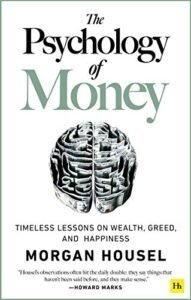
The Psychology of Money by Morgan Housel is a timeless, story-driven guide to how human behavior shapes financial outcomes far more than intelligence or technical knowledge.
Through 19 short lessons, Housel explains why people make money decisions emotionally, why financial success often depends on temperament—not talent—and how understanding your own behavior can be the greatest financial advantage.
Key Concepts
- Luck & Risk: The Hidden Role in Financial Outcomes
Housel argues that success is not purely merit, and failure is not purely incompetence.
Luck and risk play a massive yet invisible role.
→ Takeaway: Be careful when copying others—your circumstances aren’t identical.
- The Power of Compounding
Small gains sustained over long periods create extraordinary results.
Compounding doesn’t rely on brilliance—it relies on patience and consistency.
→ Compounding works only when you don’t interrupt it.
- Saving > Investing Genius
Your savings rate is more important than your investment strategy.
Being reasonable beats being overly rational.
→ Financial freedom comes from behavior, not high returns.
- Freedom Is the Highest Dividend
The goal of money is control over your time.
Freedom to choose how you spend your day is worth more than status or luxury.
- Everyone Lives a Different Financial Story
People make decisions based on their life experiences—how they grew up, what they fear, and what they value.
So financial advice is personal, not universal.
→ “No one is crazy” — just shaped by different stories.
- Avoiding the Tail Risks
A few big mistakes can wipe out decades of progress.
→ Housel urges readers to guard against catastrophic losses instead of trying to be perfect.
Main Takeaway
Money is less about spreadsheets and more about self-awareness.
If you understand your own emotions, your relationship with risk, your long-term goals, and the power of compounding, you can build lasting wealth—even without high income or complex investing strategies.
Financial mastery begins with mastering behavior.